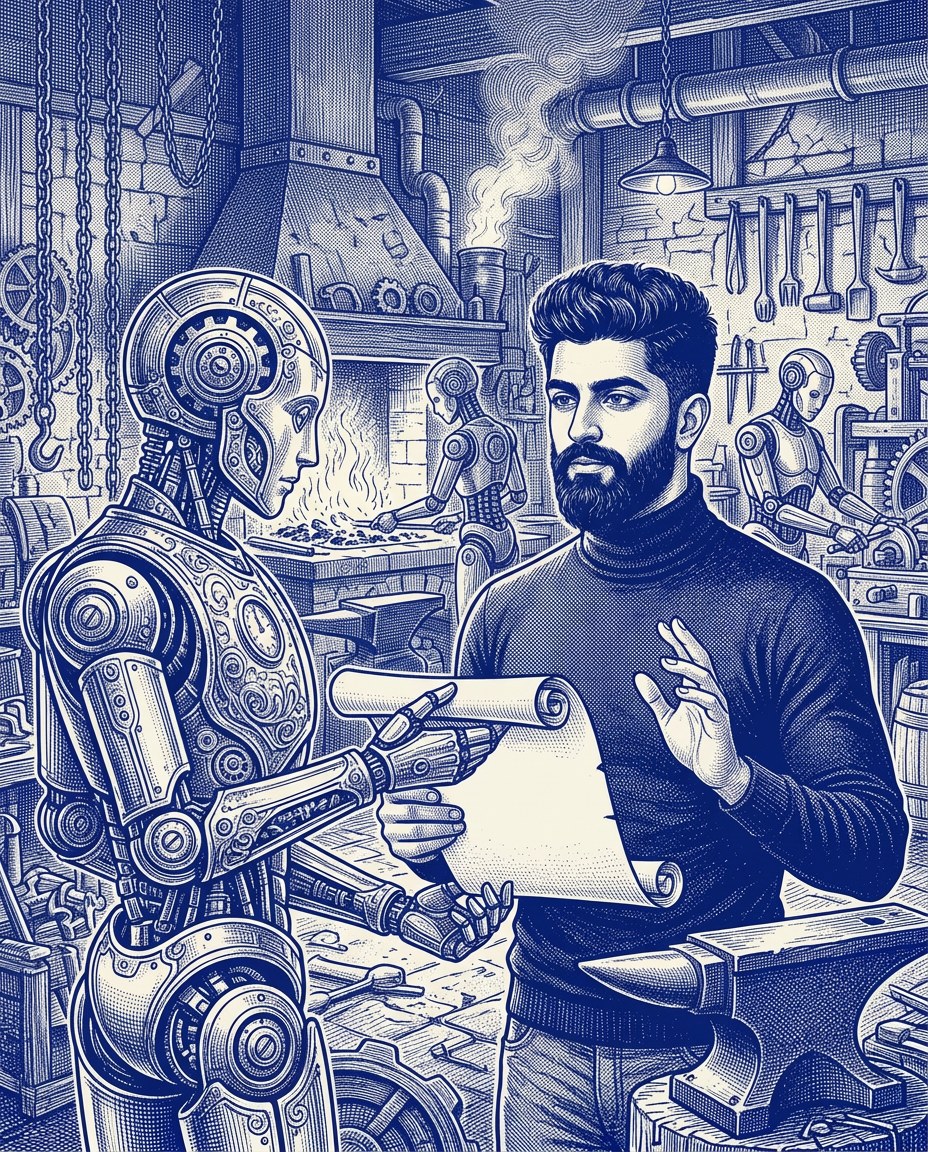
Homer gives Hephaestus helpers of gold: they walk, they speak, they know the craft. And yet nothing in the forge is finished until the god looks at it. That is the whole design brief for an agentic product, written three thousand years early.
Most agent demos skip the second half of the myth. They show the helper drafting and never the moment of judgement. But the judgement is the product. Where does the human look? What do they see first? How cheap is it to say "no, the second one"?
The agent drafts. The human signs. Design the signing.
Three rules from the forge
Three rules came out of building these loops at DIU:
- Show the draft and the reason side by side. A suggestion without its reasoning is a coin toss.
- Make rejection one tap, never a form. If saying no is expensive, people stop saying it.
- Log every signature. Trust is a record, not a feeling.
The automatons in the Iliad had understanding in their hearts. Ours don't — which is exactly why the signing matters.